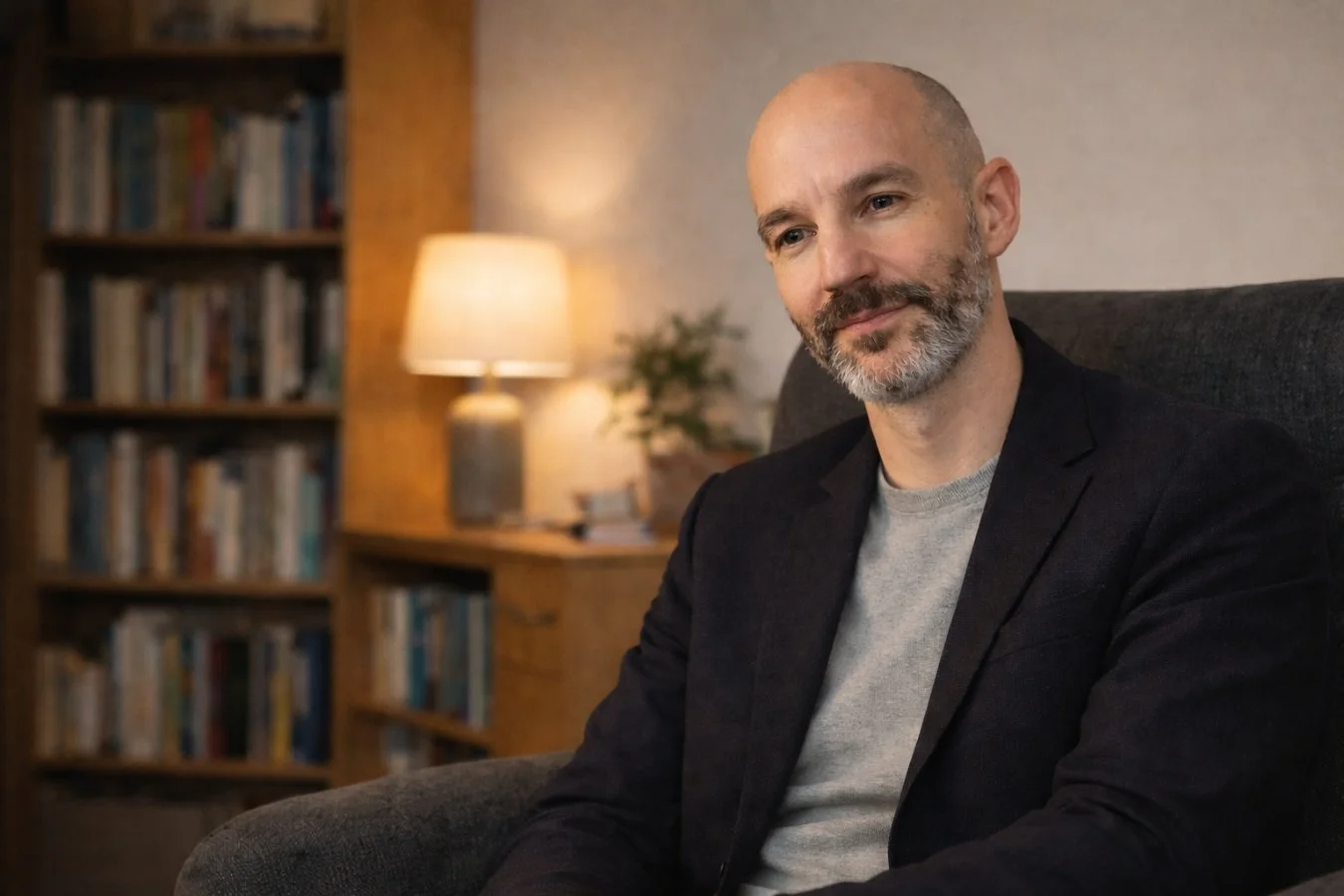

Hi, I’m Dr Pip Williams.
I’m a counselling psychologist registered with the HCPC, working to the ethical standards of my profession. This work is guided by respect for you as a person, not a problem to be fixed. You will be offered confidentiality, care, and thoughtful attention to who you are, not only to the difficulties you may be facing.
My clinical experience spans NHS primary care services and private practice. I have supported adults with a wide range of psychological difficulties, including anxiety, depression, addiction, trauma, bereavement, identity, and relationship concerns. I have also worked in specialist settings, providing one-to-one therapy for gaming addiction at the NHS Centre for Behavioural Addictions, as well as within forensic services. This breadth of experience informs how I think, how I listen, and how I work.
Therapy is not only about being heard. It is a space where careful exploration and, at times, challenge are needed. This may involve facing uncomfortable truths or loosening patterns and defences that once served a purpose but now restrict change. The work we do together will not be passive. It will ask something of both of us. My role is to offer a relationship steady enough to hold resistance and responsive enough to support change.
Something has brought you here. I don’t yet know what that is, but I believe in our capacity to face it together. You are the expert on your life. My role is to bring experience, perspective, and a space in which something new can begin to take shape.
Hi, I’m Dr Pip Williams.
I’m a counselling psychologist registered with the HCPC, working to the ethical standards of my profession. This work is guided by respect for you as a person, not a problem to be fixed. You will be offered confidentiality, care, and thoughtful attention to who you are, not only to the difficulties you may be facing.
My clinical experience spans NHS primary care services and private practice. I have supported adults with a wide range of psychological difficulties, including anxiety, depression, addiction, trauma, bereavement, identity, and relationship concerns. I have also worked in specialist settings, providing one-to-one therapy for gaming addiction at the NHS Centre for Behavioural Addictions, as well as within forensic services. This breadth of experience informs how I think, how I listen, and how I work.
Therapy is not only about being heard. It is a space where careful exploration and, at times, challenge are needed. This may involve facing uncomfortable truths or loosening patterns and defences that once served a purpose but now restrict change. The work we do together will not be passive. It will ask something of both of us. My role is to offer a relationship steady enough to hold resistance and responsive enough to support change.
Something has brought you here. I don’t yet know what that is, but I believe in our capacity to face it together. You are the expert on your life. My role is to bring experience, perspective, and a space in which something new can begin to take shape.
Hi, I’m Dr Pip Williams
I’m a counselling psychologist registered with the HCPC, working to the ethical standards of my profession. This work is guided by respect for you as a person, not a problem to be fixed. You will be offered confidentiality, care, and thoughtful attention to who you are, not only to the difficulties you may be facing.
My clinical experience spans NHS primary care services and private practice. I have supported adults with a wide range of psychological difficulties, including anxiety, depression, addiction, trauma, bereavement, identity, and relationship concerns. I have also worked in specialist settings, providing one-to-one therapy for gaming addiction at the NHS Centre for Behavioural Addictions, as well as within forensic services. This breadth of experience informs how I think, how I listen, and how I work.
Therapy is not only about being heard. It is a space where careful exploration and, at times, challenge are needed. This may involve facing uncomfortable truths or loosening patterns and defences that once served a purpose but now restrict change. The work we do together will not be passive. It will ask something of both of us. My role is to offer a relationship steady enough to hold resistance and responsive enough to support change.
Something has brought you here. I don’t yet know what that is, but I believe in our capacity to face it together. You are the expert on your life. My role is to bring experience, perspective, and a space in which something new can begin to take shape.

Why I do this work.
I came to this profession through personal experience. For a long time, I felt disconnected, stuck in patterns I couldn’t shift and unsure what was wrong or where to begin. I know what it’s like to feel distant from yourself, to carry doubt, and to move through life behind a version of you that doesn’t quite fit.
That period shaped not only how I understand change, but what I became interested in clinically. My core areas of interest include addiction, shame, and attachment-related difficulties, particularly where disconnection or avoidance plays a central role. My doctoral research, currently seeking publication, explores the lived experiences of long-term gamers and the antagonistic friction between their real and offline lives. This reflects my broader interest in how people cope when life feels unmanageable or painful.
What that time taught me is that change often becomes possible not by doing more, but by relating differently to what we already feel. Many long-standing difficulties develop through repeated attempts to manage, suppress, or avoid emotional experience. When those emotions are approached with curiosity and understanding, and when underlying psychological and physical needs are attended to over time, change can begin to take root. It is not immediate, but it is real, and it can be sustained.
Change may be slow, but it is often more achievable than people expect. Seeing someone loosen shame or reclaim hidden parts of themselves is something I find genuinely moving. It keeps me engaged in the work, especially when change is gradual or hard-won, and gives me the resolve to remain alongside someone when things feel stuck.
Why I do this work.
I came to this profession through personal experience. For a long time, I felt disconnected, stuck in patterns I couldn’t shift and unsure what was wrong or where to begin. I know what it’s like to feel distant from yourself, to carry doubt, and to move through life behind a version of you that doesn’t quite fit.
That period shaped not only how I understand change, but what I became interested in clinically. My core areas of interest include addiction, shame, and attachment-related difficulties, particularly where disconnection or avoidance plays a central role. My doctoral research, currently seeking publication, explores the lived experiences of long-term gamers and the antagonistic friction between their real and offline lives. This reflects my broader interest in how people cope when life feels unmanageable or painful.
What that time taught me is that change often becomes possible not by doing more, but by relating differently to what we already feel. Many long-standing difficulties develop through repeated attempts to manage, suppress, or avoid emotional experience. When those emotions are approached with curiosity and understanding, and when underlying psychological and physical needs are attended to over time, change can begin to take root. It is not immediate, but it is real, and it can be sustained.
Change may be slow, but it is often more achievable than people expect. Seeing someone loosen shame or reclaim hidden parts of themselves is something I find genuinely moving. It keeps me engaged in the work, especially when change is gradual or hard-won, and gives me the resolve to remain alongside someone when things feel stuck.

Why I do this work
I came to this profession through personal experience. For a long time, I felt disconnected, stuck in patterns I couldn’t shift and unsure what was wrong or where to begin. I know what it’s like to feel distant from yourself, to carry doubt, and to move through life behind a version of you that doesn’t quite fit.
That period shaped not only how I understand change, but what I became interested in clinically. My core areas of interest include addiction, shame, and attachment-related difficulties, particularly where disconnection or avoidance plays a central role. My doctoral research, currently seeking publication, explores the lived experiences of long-term gamers and the antagonistic friction between their real and offline lives. This reflects my broader interest in how people cope when life feels unmanageable or painful.
What that time taught me is that change often becomes possible not by doing more, but by relating differently to what we already feel. Many long-standing difficulties develop through repeated attempts to manage, suppress, or avoid emotional experience. When those emotions are met with curiosity and understanding, and when underlying psychological and physical needs are attended to over time, change can begin to take root. It is not immediate, but it is real, and it can be sustained.
I believe that change is often more achievable than people expect. Seeing someone loosen shame or reclaim hidden parts of themselves is something I find genuinely moving. It keeps me engaged in the work, especially when change is gradual or hard-won, and gives me the resolve to remain alongside someone when things feel stuck.

What I Stand For
I believe therapy should be evidence-based, respectful, and useful. I don’t come with an agenda to affirm or oppose, but to listen closely and work alongside you to explore what feels true for you. At times, therapy asks us to face uncomfortable realities or begin the slow process of letting go of beliefs and patterns that no longer serve us. I won’t avoid those moments, and I won’t expect you to face them alone.
I don’t believe in reducing people to labels, ideologies, or diagnoses. I believe in the capacity to grow, to take responsibility, and to reconnect with what genuinely matters, even when the path forward feels uncertain. Sometimes that requires care; at other times, it requires challenge. Therapy is not about comfort for its own sake. It is about creating a space where something honest and meaningful can take place.
I stand for an approach that respects your complexity and honours your agency. One that allows your strength to emerge, even in the presence of doubt or distress. I value emotional clarity, and the development of resilience that can be drawn on long after therapy ends.
What I Stand For.
I believe therapy should be non-directive, respectful, and useful. I don’t come with an agenda to affirm or oppose, but to listen closely and work alongside you to explore what feels true for you. At times, therapy asks us to face uncomfortable realities or begin the slow process of letting go of beliefs and patterns that no longer serve us. I won’t avoid those moments, and I won’t expect you to face them alone.
I don’t believe in reducing people to labels, ideologies, or diagnoses. I believe in the capacity to grow, to take responsibility, and to reconnect with what genuinely matters, even when the path forward feels uncertain. Sometimes that requires care; at other times, it requires challenge. Therapy is not about comfort for its own sake. It is about creating a space where something honest and meaningful can take place.
I stand for an approach that respects your complexity and honours your agency. One that allows your strength to emerge, even in the presence of doubt or distress. I value evidence-informed work, emotional clarity, and the development of resilience that can be drawn on long after therapy ends.
What I Stand For.
I believe therapy should be non-directive, respectful, and useful. I don’t come with an agenda to affirm or oppose, but to listen closely and work alongside you to explore what feels true for you. At times, therapy asks us to face uncomfortable realities or begin the slow process of letting go of beliefs and patterns that no longer serve us. I won’t avoid those moments, and I won’t expect you to face them alone.
I don’t believe in reducing people to labels, ideologies, or diagnoses. I believe in the capacity to grow, to take responsibility, and to reconnect with what genuinely matters, even when the path forward feels uncertain. Sometimes that requires care; at other times, it requires challenge. Therapy is not about comfort for its own sake. It is about creating a space where something honest and meaningful can take place.
I stand for an approach that respects your complexity and honours your agency. One that allows your strength to emerge, even in the presence of doubt or distress. I value evidence-informed work, emotional clarity, and the development of resilience that can be drawn on long after therapy ends.
What Keeps Me Going.
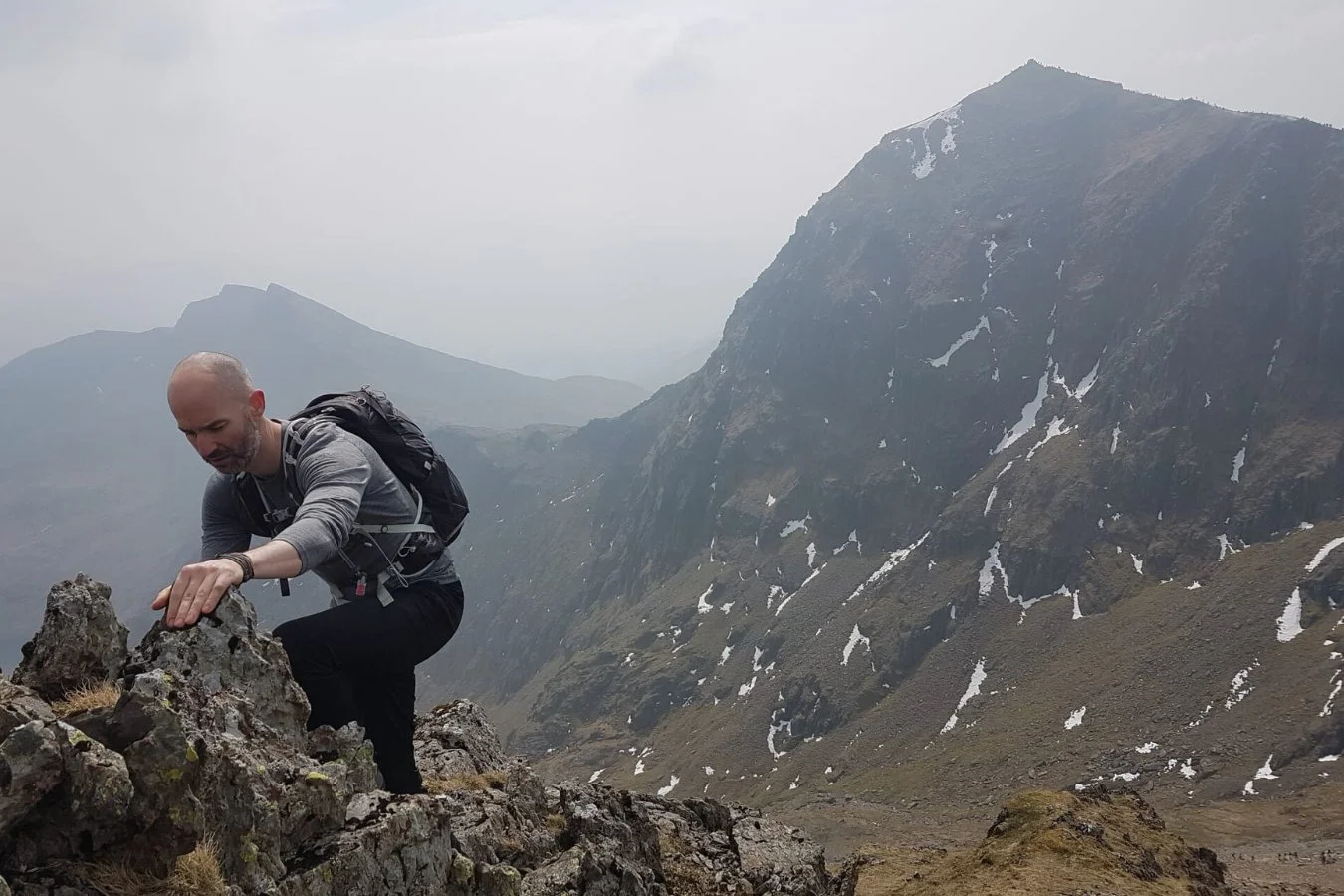
I find calm in the vastness of the natural world: mountains, forests, open water. There’s something deeply steadying in being surrounded by what is ancient and immense. It reminds me how small we are, and how freeing that can be. In those moments, the pressure to get everything right quietens, and something more spacious opens up. I try to carry that perspective into how I live, and into the work I do.
I’m drawn to connection in many forms: music that says the unsayable, friendships rooted in honesty, creativity as a way of finding your way back to yourself. I value openness, humour, and the courage to seek authenticity especially in moments of vulnerabilty.
This work challenges me and sustains me in equal measure. It asks for the same openness, perspective, and willingness to stay with what is real, even when it feels uncertain. That is a commitment I take seriously.
What Keeps Me Going.
I find calm in the vastness of the natural world: mountains, forests, open water. There’s something deeply steadying in being surrounded by what is ancient and immense. It reminds me how small we are, and how freeing that can be. In those moments, the pressure to get everything right quietens, and something more spacious opens up. I try to carry that perspective into how I live, and into the work I do.
I’m drawn to connection in many forms: music that says the unsayable, friendships rooted in honesty, creativity as a way of finding your way back to yourself. I value openness, humour, and the courage to seek authenticity especially in moments of vulnerabilty.
This work challenges me and sustains me in equal measure. It asks for the same openness, perspective, and willingness to stay with what is real, even when it feels uncertain. That is a commitment I take seriously.
What Keeps Me Going
I find calm in the vastness of the natural world: mountains, forests, open water. There’s something steadying in being surrounded by what is ancient and immense. It reminds me how small we are, and how freeing that can be. In those moments, the pressure to get everything right quietens, and something more spacious opens up. I try to carry that perspective into how I live, and into the work I do.
I’m drawn to connection in many forms: music that says the unsayable, friendships rooted in honesty, creativity as a way of finding your way back to yourself. I value openness, humour, and the courage to seek authenticity especially in moments of vulnerabilty.
This work challenges me and sustains me in equal measure. It asks for the same openness, perspective, and willingness to stay with what is real, even when it feels uncertain. That is a commitment I take seriously.