



Something has reached a point where it can’t be ignored.
You may have tried to manage it, reason with it, push through it. But it’s still here. And now it needs attention.
I offer therapy for adults that is thoughtful, structured, and guided by evidence. We look honestly at what has shaped you and what remains within your control.
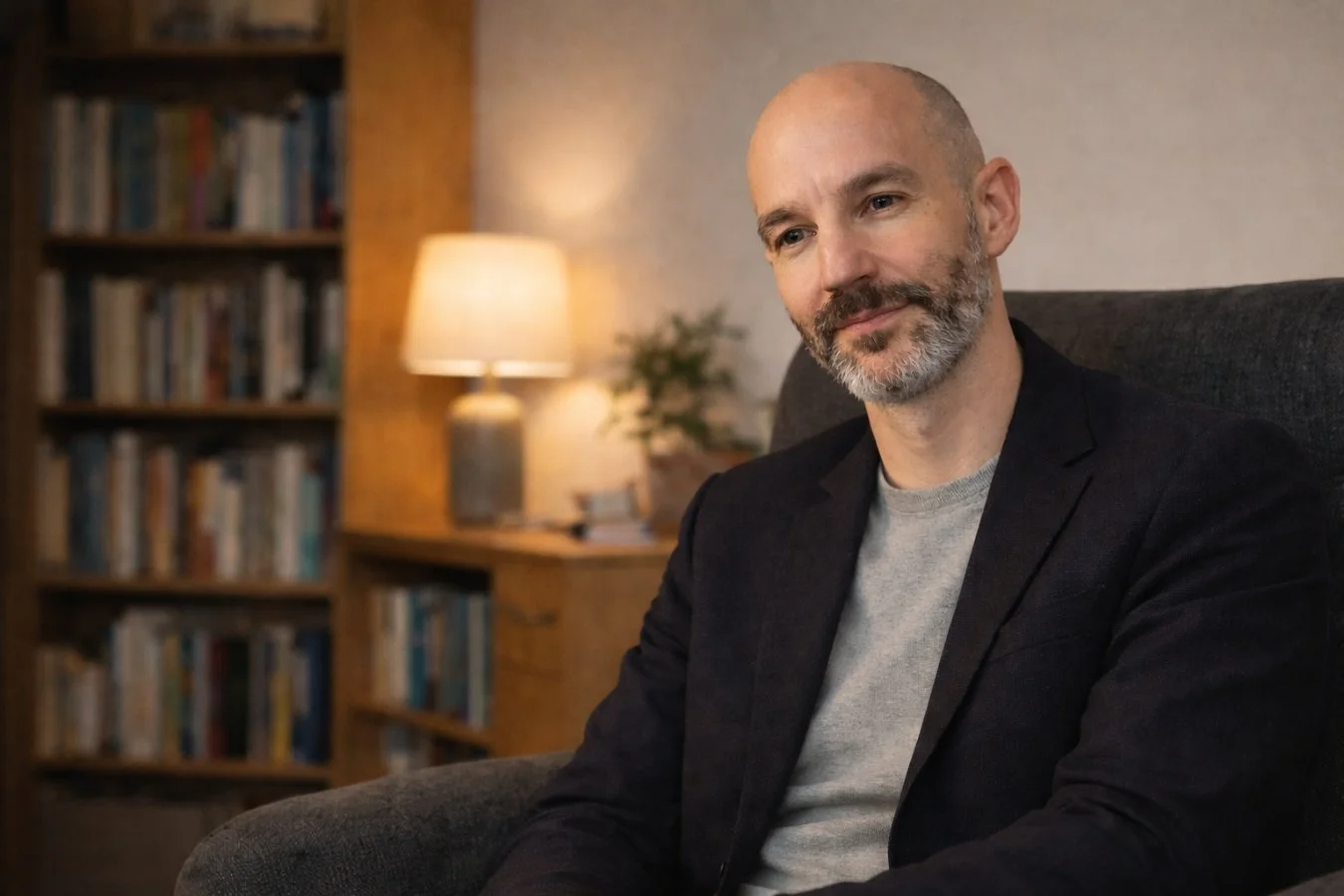

Therapy isn’t always comfortable. At times, moving towards freedom means facing difficult realities or staying with discomfort long enough to grow stronger. This is where the therapeutic relationship matters most. When there is trust and stability between us, resilience can develop and a different way of living can begin.
Whatever brings you here, we can face it when you’re ready.
Read more about me
Something has reached a point where it can’t be ignored.
You may have tried to manage it, reason with it, push through it. But it’s still here. And now it needs attention.
I offer therapy for adults that is thoughtful, structured, and guided by evidence. We look honestly at what has shaped you and what remains within your control.
Therapy isn’t always comfortable. At times, moving towards freedom means facing difficult realities or staying with discomfort long enough to grow stronger. This is why our working relationship matters. When there is trust and stability between us, resilience can develop and a different way of living can begin.
Whatever brings you here, we can face it when you’re ready.
Read more about me
Counselling Psychologist
HCPC Reg: PYL045847
Something has reached a point where it can’t be ignored.
You may have tried to manage it, reason with it, push through it. But it’s still here. And now it needs attention.
I offer therapy for adults that is thoughtful, structured, and guided by evidence. We look honestly at what has shaped you and what remains within your control.
Therapy isn’t always comfortable. At times, moving towards freedom means facing difficult realities or staying with discomfort long enough to grow stronger. This is why our working relationship matters. When there is trust and stability between us, resilience can develop and a different way of living can begin.
Whatever brings you here, we can face it when you’re ready.
Read more about me
Counselling Psychologist
HCPC Reg: PYL045847

REASONS YOU MIGHT BE HERE
I work with a range of presenting problems, many of which fall within the main categories below. You can find a more in-depth look at my services here.
Anxiety
“I live in anticipation, not in the moment”
The constant scanning, second-guessing, and tension that never seems to let up. We can make sense of what drives your anxiety—and find steadier more reliable ways of responding.
Depression
“There’s a silence in me that no one hears.”
When life feels flat, heavy, or too much to face. We can explore what’s weighing you down and work towards reconnecting with energy, meaning, and momentum in your life again.
Addiction
“I mistook escape for
freedom”
Addiction often begins as a way to manage pain—quietly, urgently, and for a while, effectively. We can explore what that pain is asking for, and what might help you face it differently.
Trauma
“It didn’t repeat. But it never truly ended”
Past experiences can leave lasting marks—sometimes obvious, sometimes harder to trace. We can work gently and safely to understand those impacts and begin to loosen their grip.
REASONS YOU MIGHT BE HERE
I work with a range of presenting problems, many of which fall within the main categories below. You can find a more in-depth look at my services here.
Anxiety
“I live in anticipation, not in the moment”
The constant scanning, second-guessing, and tension that never seems to let up. We can make sense of what drives your anxiety—and find steadier more reliable ways of responding.
Depression
“There’s a silence in me that no one hears.”
When life feels flat, heavy, or too much to face. We can explore what’s weighing you down and work towards reconnecting with energy, meaning, and momentum in your life again.
Addiction
“I mistook escape for freedom”
Addiction often begins as a way to manage pain—quietly, urgently, and for a while, effectively. We can explore what that pain is asking for, and what might help you face it differently.
Trauma
“It didn’t repeat. But it never truly ended”
Past experiences can leave lasting marks—sometimes obvious, sometimes harder to trace. We can work gently and safely to understand those impacts and begin to loosen their grip.
WHY YOU’RE HERE
People come to therapy for many reasons — these four come up most often.
Anxiety
“I tried to quiet my mind, but it only whispered louder.”
The constant scanning, second-guessing, and tension that never seems to let up. We can make sense of what drives your anxiety and find steadier ways of responding to it.
Depression
“There’s a silence in me that no one hears.”
When life feels flat, heavy, or too much to face. We can explore what’s weighing you down and work towards reconnecting with energy, meaning, and momentum.
Addiction
“I mistook escape for
freedom”
Addiction often begins as a way to manage pain—quietly, urgently, and for a while, effectively. We can explore what that pain is asking for, and what might help you face it differently.
Trauma
“It didn’t happen again. But it never stopped”
Past experiences can leave lasting marks—sometimes obvious, sometimes harder to trace. We can work gently and safely to understand those impacts and begin to loosen their grip.
See the services page for a fuller overview.

HOW I WORK
Here you can read how our work together might unfold over time.
While therapy rarely follows a straight line, there are some consistent ways of working that tend to shape the process, from where we begin, to how we make sense of things, and how we stay with the work when it becomes difficult.
-
We begin by understanding where you are now.
You don’t need to arrive with a clear diagnosis, a theory, or a sense of which therapy you “should” have. Most people come feeling unsure, conflicted, or simply stuck.
My role is to meet you where you are and begin by listening carefully to how things feel now, what you’ve already tried, and what brings you here at this point in your life. We start with your experience, rather than forcing it into a pre-set framework.
-
We work to understand patterns, not just individual problems.
A central part of the work is developing clarity. Together, we build a shared understanding of how your difficulties have come to be, what may be keeping them going, and how different aspects of your life connect.This often involves reflecting honestly on past experiences, relationships, and patterns, while also attending to what is happening in the present.The aim is not analysis for its own sake, but insight that reduces confusion and self-blame, helping you make sense of your experience and respond to it with greater clarity.
-
My approach is to adapt the work to you, rather than applying a single therapeutic model to everyone.
This means I work in what is often described as an integrative way. We begin by developing a clear understanding of what’s going on and what may be keeping the problem in place. This insight is often influenced by psychodynamic or cogntive-behavioural frameworks, depending on what best fits you and your situation.Next, where there is good evidence to support it, we may introduce specific methods or practices from other therapeutic approaches, chosen carefully to support the work. For example, when exploring past relationships and patterns, compassion-focused techniques may be used to work with self-criticism.
-
Therapy is an active process of partnership. We combine our expertise.
I bring clinical training and judgement, and you are the expert on your life. Together we shape how therapy unfolds, including the focus, pace, and the ways we approach the work. What helps one person may not help another, and your preferences and experience matter.Some people value structure and practical tools; others need space to reflect and explore. We talk openly about what feels useful, review this over time, and adjust our approach as needed.
-
We expect periods of stuckness, and work deliberately with what they reveal.
Therapy is not often a linear process. Old patterns reappear, progress can slow, and discomfort or disappointment may surface as the work deepens. Rather than seeing this as a problem to eliminate, we pay attention to what these moments reveal about what keeps things in place.Part of our work may involve developing the capacity to tolerate this discomfort, while continuing to reflect on what is and isn’t helping. My role is to remain steady and engaged during these periods, while we assess whether the work is genuinely loosening something. If it isn’t, we pause, re-evaluate, and consider what needs to change — including, where appropriate, whether this way of working is the right fit.

HOW I WORK
Read how our work together might unfold over time.
While therapy isn’t linear, there are consistent ways of working that often shape this process.
-
We begin by understanding where you are now.
You don’t need to arrive with a clear diagnosis, a theory, or a sense of which therapy you “should” have. Most people come feeling unsure, conflicted, or simply stuck.
My role is to meet you where you are and begin by listening carefully to how things feel now, what you’ve already tried, and what brings you here at this point in your life. We start with your experience, rather than forcing it into a pre-set framework
-
We work to understand patterns, not just individual problems.
A central part of the work is developing clarity. Together, we build a shared understanding of how your difficulties have come to be, what may be keeping them going, and how different aspects of your life connect.This often involves reflecting honestly on past experiences, relationships, and patterns, while also attending to what is happening in the present.The aim is not analysis for its own sake, but insight that reduces confusion and self-blame, helping you make sense of your experience and respond to it with greater clarity.
-
My approach is to adapt the work to you, rather than applying a single therapeutic model to everyone.
This means I work in what is often described as an integrative way. We begin by developing a clear understanding of what’s going on and what may be keeping the problem in place. This insight is often influenced by psychodynamic or cogntive-behavioural frameworks, depending on what best fits you and your situation.Next, where there is good evidence to support it, we may introduce specific methods or practices from other therapeutic approaches, chosen carefully to support the work. For example, when exploring past relationships and patterns, compassion-focused techniques may be used to work with self-criticism.
-
Therapy is an active process of partnership. We combine our expertise.
I bring clinical training and judgement, and you are the expert on your life. Together we shape how therapy unfolds, including the focus, pace, and the ways we approach the work. What helps one person may not help another, and your preferences and experience matter.Some people value structure and practical tools; others need space to reflect and explore. We talk openly about what feels useful, review this over time, and adjust our approach as needed.
-
We expect periods of stuckness, and work deliberately with what they reveal.
Therapy is not often a linear process. Old patterns reappear, progress can slow, and discomfort or disappointment may surface as the work deepens. Rather than seeing this as a problem to eliminate, we pay attention to what these moments reveal about what keeps things in place.Part of our work may involve developing the capacity to tolerate this discomfort, while continuing to reflect on what is and isn’t helping. My role is to remain steady and engaged during these periods, while we assess whether the work is genuinely loosening something. If it isn’t, we pause, re-evaluate, and consider what needs to change — including, where appropriate, whether this way of working is the right fit.